Heating on. Clocks back. Two unrelated facts, but taken together a reasonable indicator that autumn is upon us.
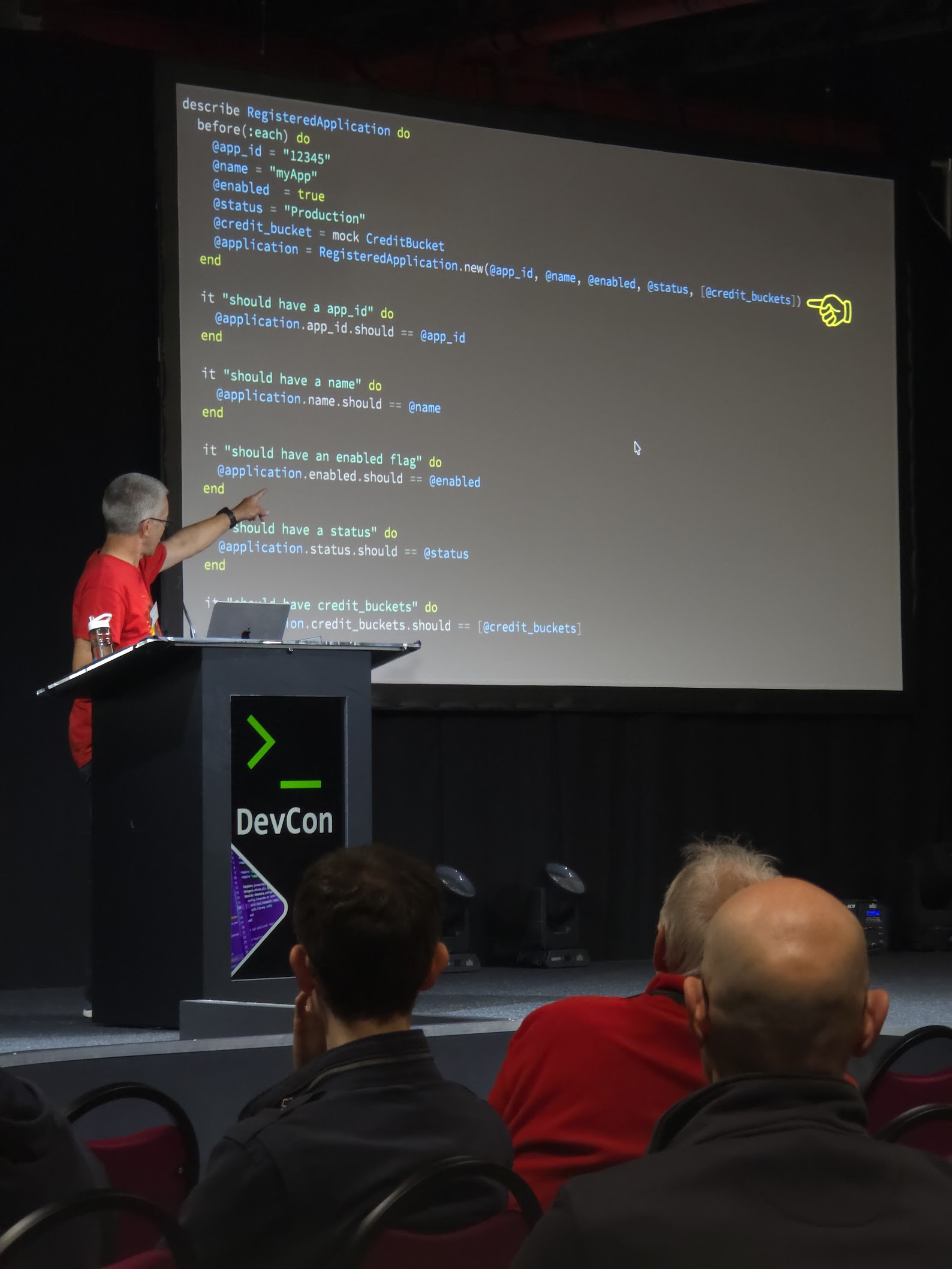
On Wednesday I did my customary talk at the DevCon event at work (the 20th one, and now covering multiple sites via Teams). My topic was “How Do You Test That?”, in which I attempted to pass on some random tips I’ve picked up from 20+ years of trying to write half-decent automated tests (with a partially-hidden “please consider doing TDD” message). As usual I left it too late to prepare and spent so long on creating sample code and building a ludicrous number of slides (including animations, I worked out that I needed to hit “next” every ten seconds or so to fit in my allotted half hour) that I didn’t leave time for a proper run-through, but I think I mostly got away with it and only went slightly over.
Pointing at some dreadful but well-intentioned tests from 2007
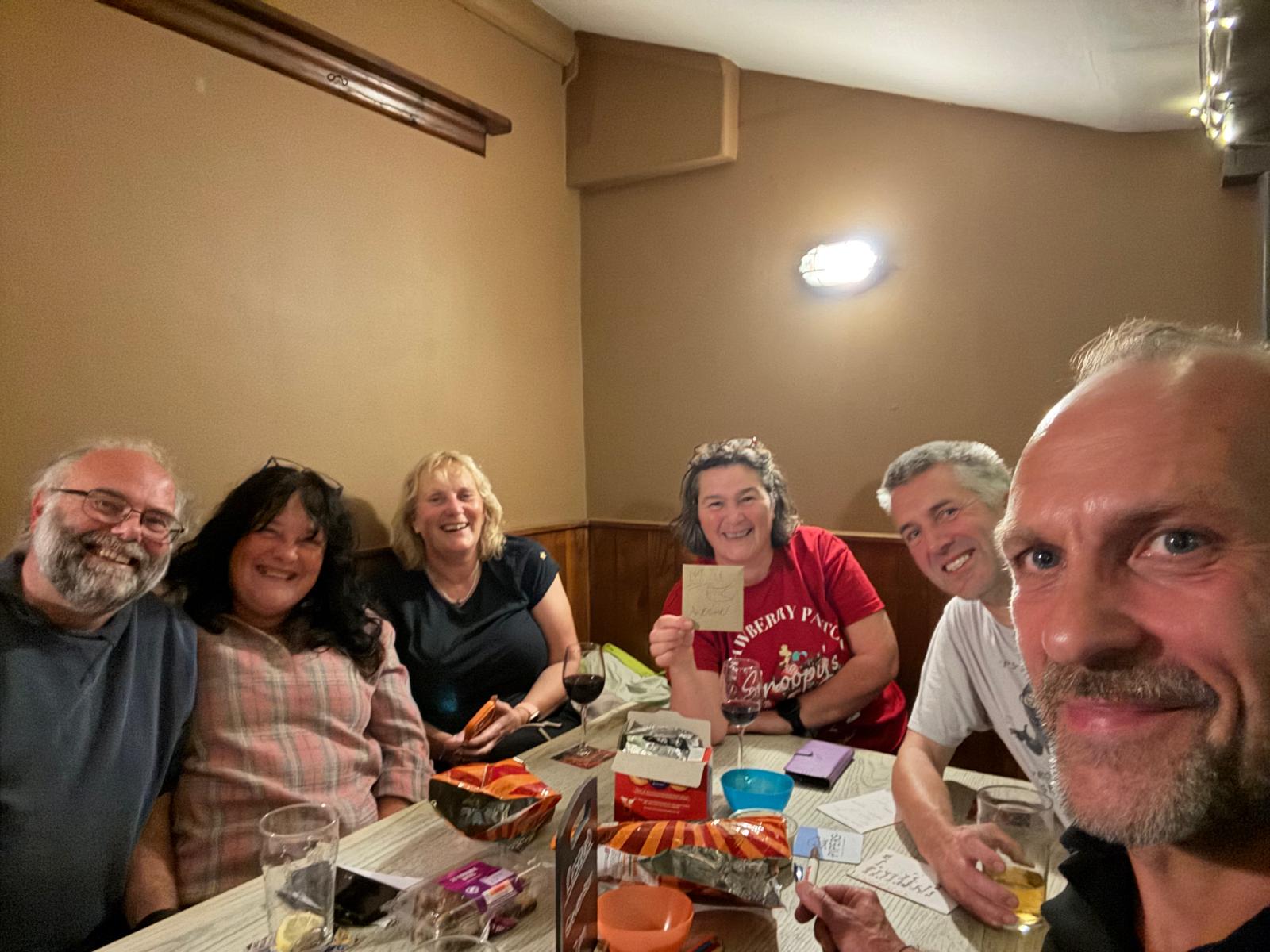
Then in the evening I was back in the Fat Cat for the ex-colleagues meet-up delayed from last week. A decent turnout this month, with Mel, Tony, Rupert, Joe and Dave F. The pub was pleasantly busy for a random damp Wednesday, and they had the new Adnams Ghost Ship Baltic Porter on draught.
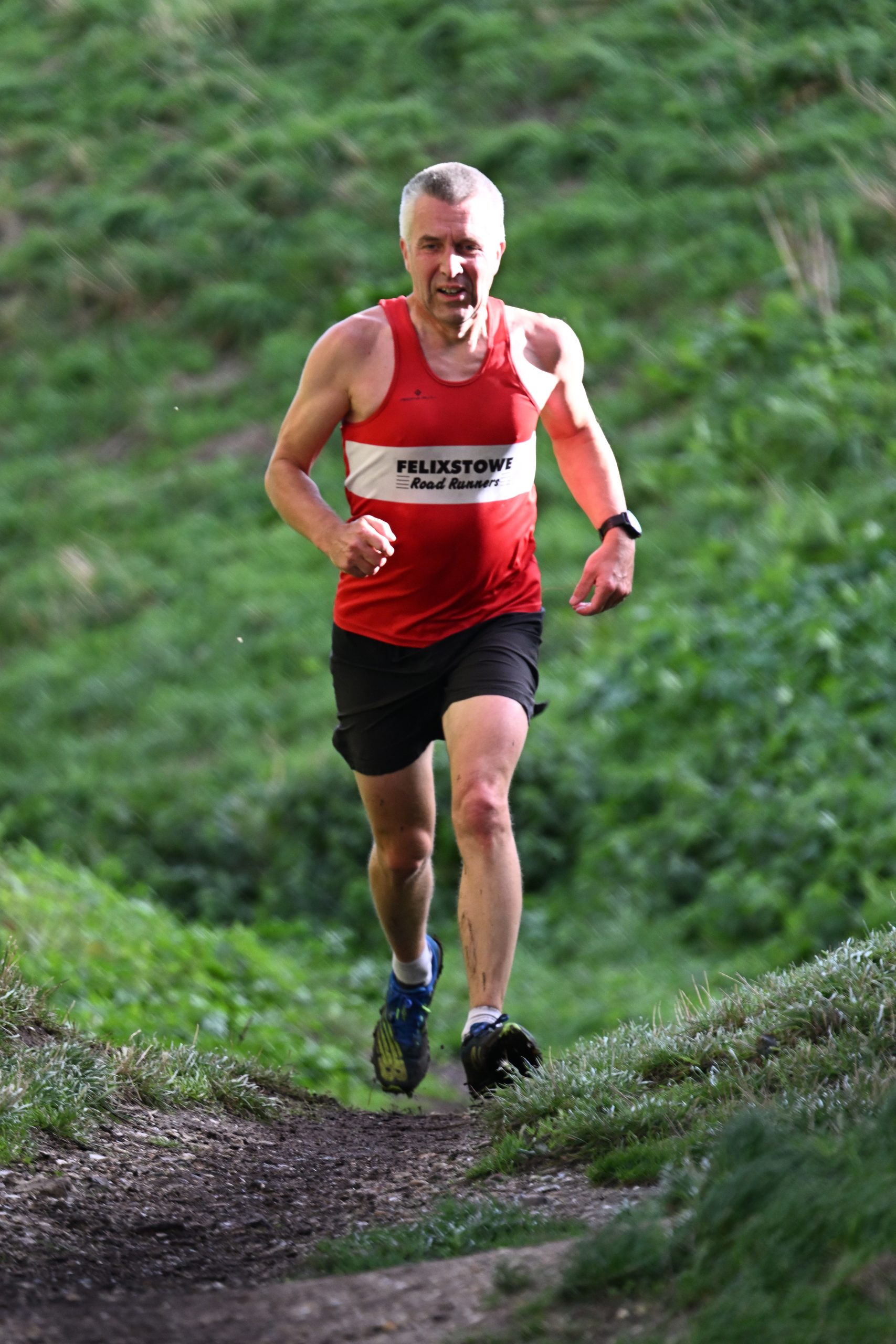
Sunday saw the return of the Suffolk Winter [cross country] League, with the first fixture at Framlingham as usual. It was a mild and gloriously sunny day, and the course was still mostly dry despite yesterday’s rain, but there was a strong wind. It’s a popular race on a course that restricts you to single file for long sections, and I’ll blame starting a bit too far back for my relatively mediocre time (that’s my excuse and I’m sticking to it, although the photo below of me apparently on my own in the moat approaching the finish doesn’t exactly corroborate my story).
On Monday I was recruited as a substitute for Dave & Sally’s team for the Fat Cat pub quiz. We managed to win, although I’m not sure how much credit I can take for that.
The “Podium Sniffers” quiz team, minus most of its usual members
After Sunday’s nightmare, I was relieved to find my running apparently back to normal on Tuesday night. No-one felt much like cycling, so we went by car and did a few extra miles before the session, then I somehow managed to pretty much keep up with the fast folks for intervals up and down the prom.
I was expecting to be back in the Fat Cat on Wednesday for the monthly ex-colleagues catch-up, but with people claiming variously RSI, a cold, migraine and house rewiring we ended up putting it off until next week.
I took Friday off work, and didn’t do a huge amount with it, but I did put up the other two bike mounts in the garage, so now all six bikes are hanging on the wall and my hall looks strangely empty.
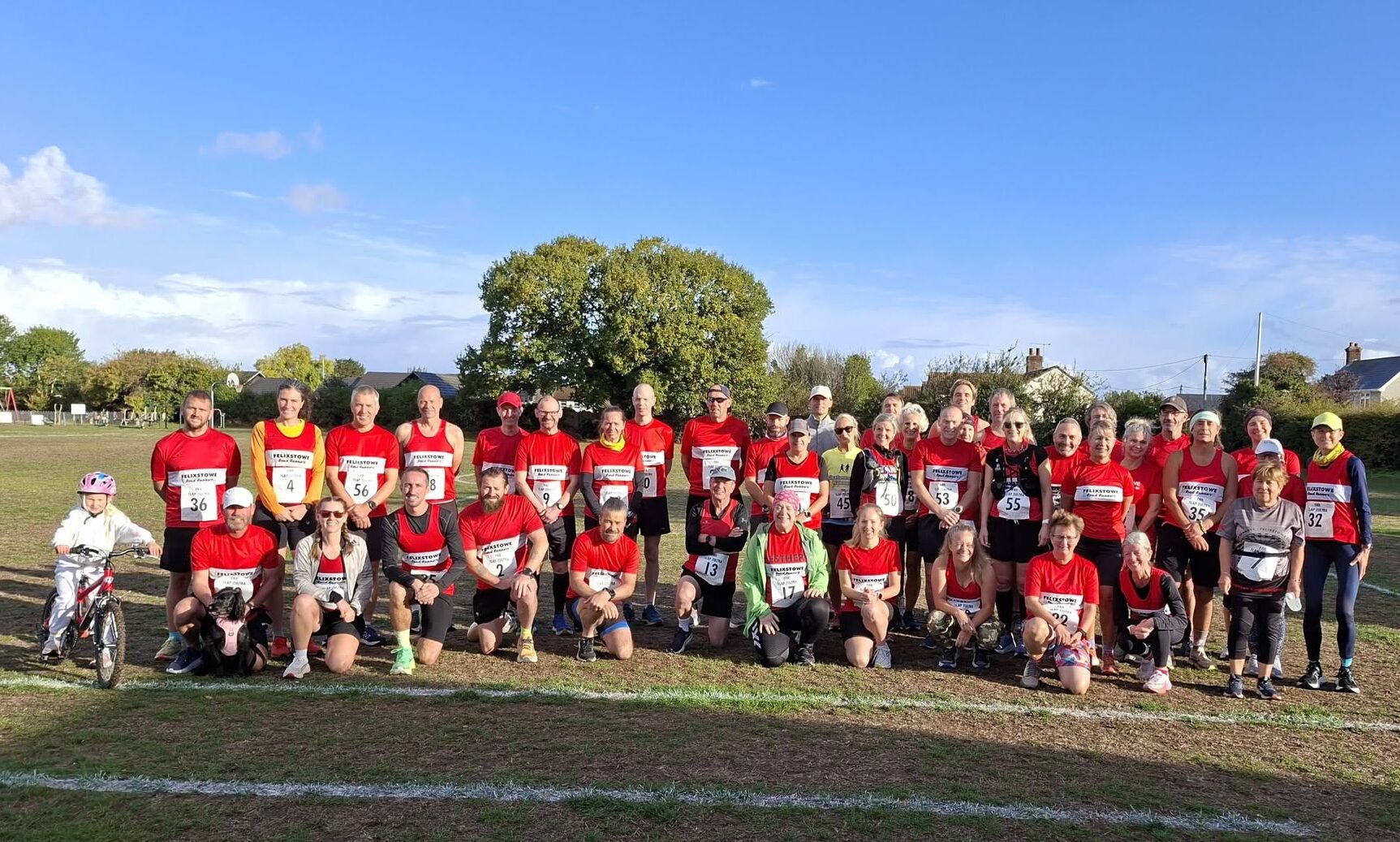
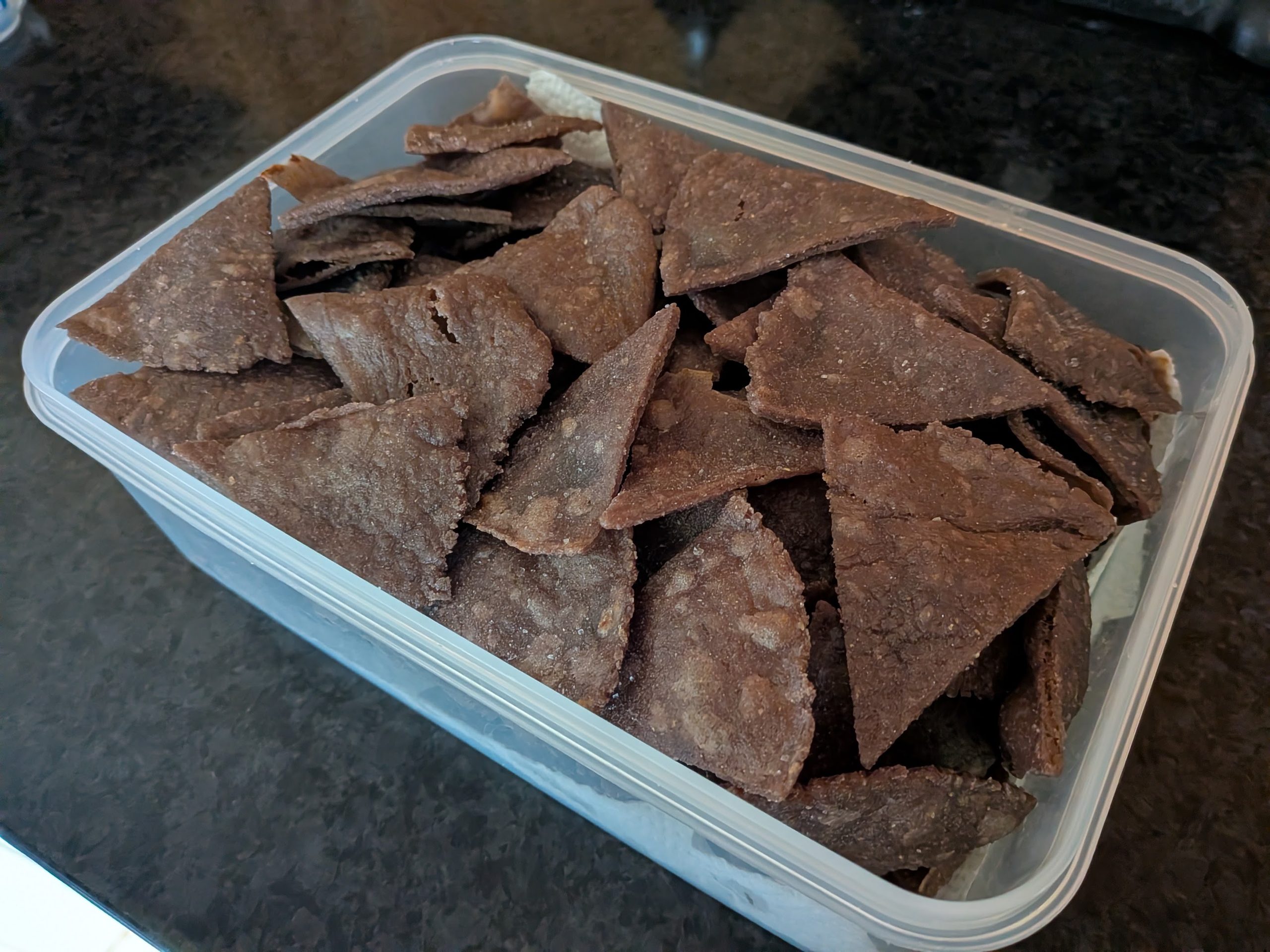
The mystery tiredness was back on Saturday, making a pretty slow parkrun feel extremely tough, but fortunately all was well again on Sunday for the annual club One Lap To Ultra social event (basically run as many 4.5-mile loops as you want/can within six hours, interspersed with eating cake). I managed seven laps (31.5 miles, or a bit over 50km) again, running the first five with Holly and Maria and the last two on my own. I briefly thought that might make me the joint leader, with the usual eight or nine lap merchants either missing or having to leave early, but well done to Jason for managing to just squeeze in an eighth after trying for the past few years. My home-made tortilla chips went down well again, despite the blue maize flour now being three years out of date, with people expressing the usual surprise that they taste much better than they look!
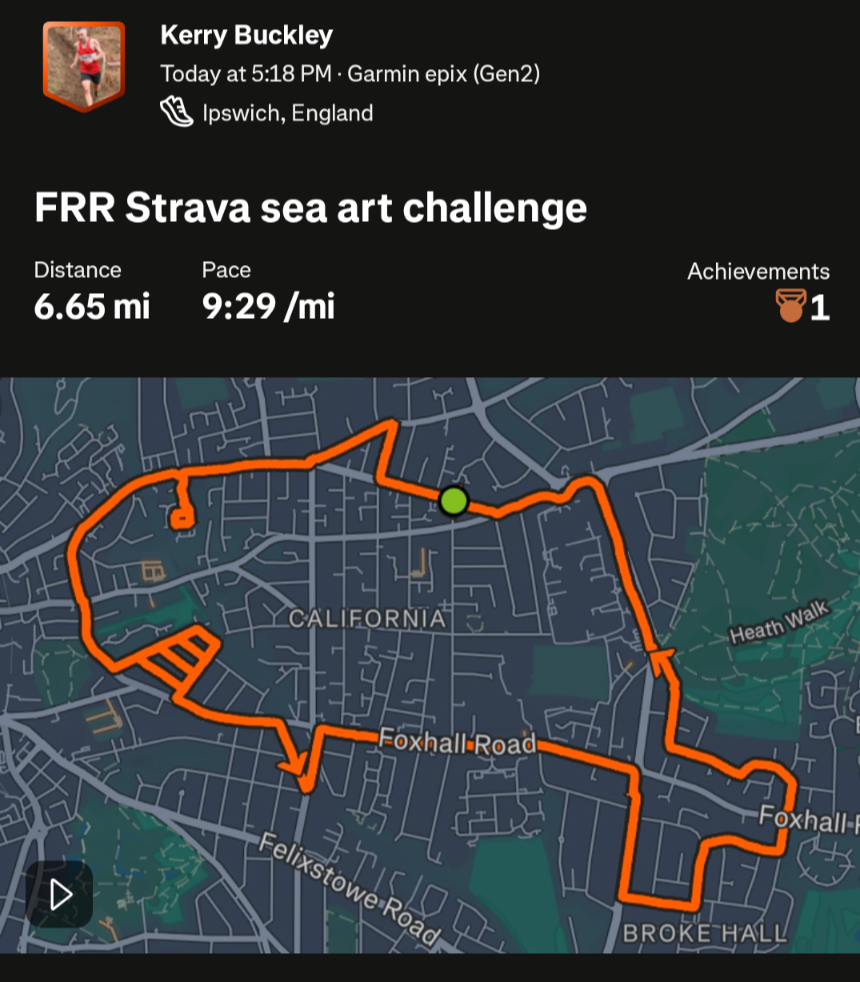
I did manage to win the Strava Art competition though, with my pathetic shark earning me a mug. That route has served me well, with a previous version of it winning me a Twilight 10k place!
Ready to startMy famously “better than they look” tortilla chips
Despite the day’s exertions, I managed to find the energy to cycle down to the Cricketers in the pouring rain to meet up with Dave, Sally and Neil for food and beer.
Still warm at the beginning of the week, and another extension of the “pleasant enough to cycle to Felixstowe for the Tuesday club training session” season. We nearly had to ride an extra couple of miles on the way home, when we reached the Murrils Road roundabout to find the road closed. Fortunately the council chap there went and asked the police whether we could sneak through, and they let us. Obviously police road closures rarely have a nice story behind them, and in this case a cyclist in his 70s had been involved in an accident and airlifted to Addenbrooke’s in critical condition.
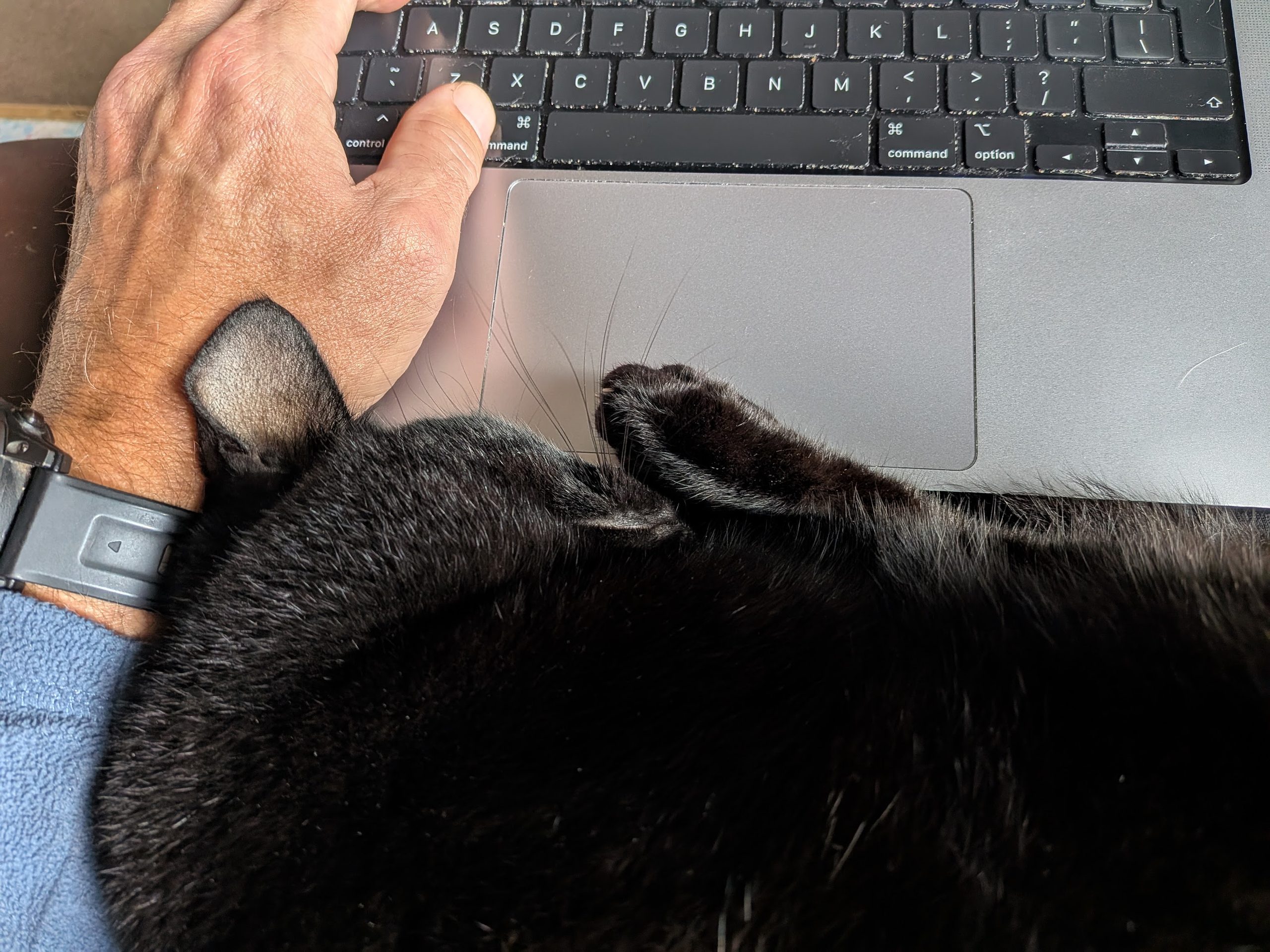
Wednesday’s weather took a turn for the autumnal, with a marked drop in temperature and a fair amount of rain (I managed to avoid the worst of it on my commute, but was still glad of the mudguards). I finally shut the windows, but by morning the temperature in my bedroom was around 15°C – the first time I’ve noticed it drop below 20 for a long time. Still not cold enough for heating yet though. As usual, the cooler weather converted Ninja from full-time outdoor cat to lap cat.
Ninja “helping” me work on Friday
I remembered to watch Taskmaster on old-fashioned live TV on Thursday, which on previous experience means that I’ll forget next week, then carefully cue it up on catch-up the next day, letting it play through the ads while I’m making lunch, then sit down and realise that “next unwatched” was actually the week-old one.
I also finished watching Veronica Mars (the three original series, the film and the brief Hulu reboot). The first couple of seasons were definitely the best, but the rest wasn’t bad.
On Saturday I filled up the brown bins again with about half the stuff I cut down last week, so the last bit of “hedge” remains uncut for now.
After reading about the very impressive-looking Temporal Resources feature (which would have been very helpful a few years ago for Joe when he tried to build a project finance tracker, and realised that modelling who worked on what when wasn’t a trivial task), I decided to finally have a play with Ash. I admit I haven’t spent enough time with it to get comfortable, but for now I think I’ll stick to plain Ecto and hand-written domain code. Maybe next time PragProg have a sale I’ll get the book, and give it a proper go.
Another five-mile race this week, this time at Capel. It’s only just outside Ipswich, so Dave, Rob and I cycled out there (about 8.5 miles each way). I had an absolute shocker though – I started with Holly and it felt like harder work than it should have from the start, then about a mile in I realised it was going to have to just be a case of dragging myself to the finish. I thought last year’s Hadleigh 10 was bad, but at least I kept running – this time I stopped and walked several times, which is something I’d never done before in a road race. By the time I finished (ten minutes slower than last week) people were starting to worry that I’d been rescued off the course by the medics. I assume I must be coming down with something. Fortunately I felt relatively normal in time to cycle home … well not directly home, but via the Cricketers to revive myself with some lunch and a few pints.
After being shut for most of the summer for a long-overdue resurfacing, the Northgate track has reopened. Something clearly went horribly wrong though, because they haven’t actually resurfaced it.
Once again I’d briefly paused my post-race socialising to book the next day off, so another lazy Monday. I hacked down a sizeable proportion of the massively overgrown privet plants (I can’t really call it a hedge) at the side of the house, and managed to cram maybe half of the resulting pile of sticks into the two brown bins, ready for them to be collected on Wednesday.
Still no sign of autumnal weather, so still cycling to Felixstowe on Tuesday evenings for now (just Neil and me this week). It’s starting to get dark on the way out now, although that might just have been because it was an oddly misty evening. I was expecting to take the running very easy after the half on Sunday, but after feeling completely worn out while warming up somehow managed to find some energy for the efforts.
Wednesday should really have been a rest day, but I realised that I’d forgotten about the sea-themed club Strava art challenge, which finished at the end of September (and how can that have already happened?), so dragged myself out in the evening to reprise the pathetic shark that I devised a few years ago (but with minor modifications to eye (deliberate) and tail (accidental but I think an improvement).
I remembered to soak the dried fruit for my Christmas cake on Friday, and baked the cake on Saturday after parkrun (plus the extra smaller one which I’ve somehow contracted myself to make for Nic for the past seven years.
The cheap C-spanners I’d ordered arrived, so I’ve now tightened up the bottom bracket on the Botecchia properly, after it unscrewed itself and ground me to a halt the other week. My previous hopeful attempt to tighten it with slip joint pliers clearly hadn’t been up to the job, because when I tried riding it again it kept trying to unscrew itself. Interestingly, according to Dave, having bottom brackets with right-hand threads on both sides is an Italian idiosyncrasy – normally the right-hand one would be left-handed to stop exactly this issue.
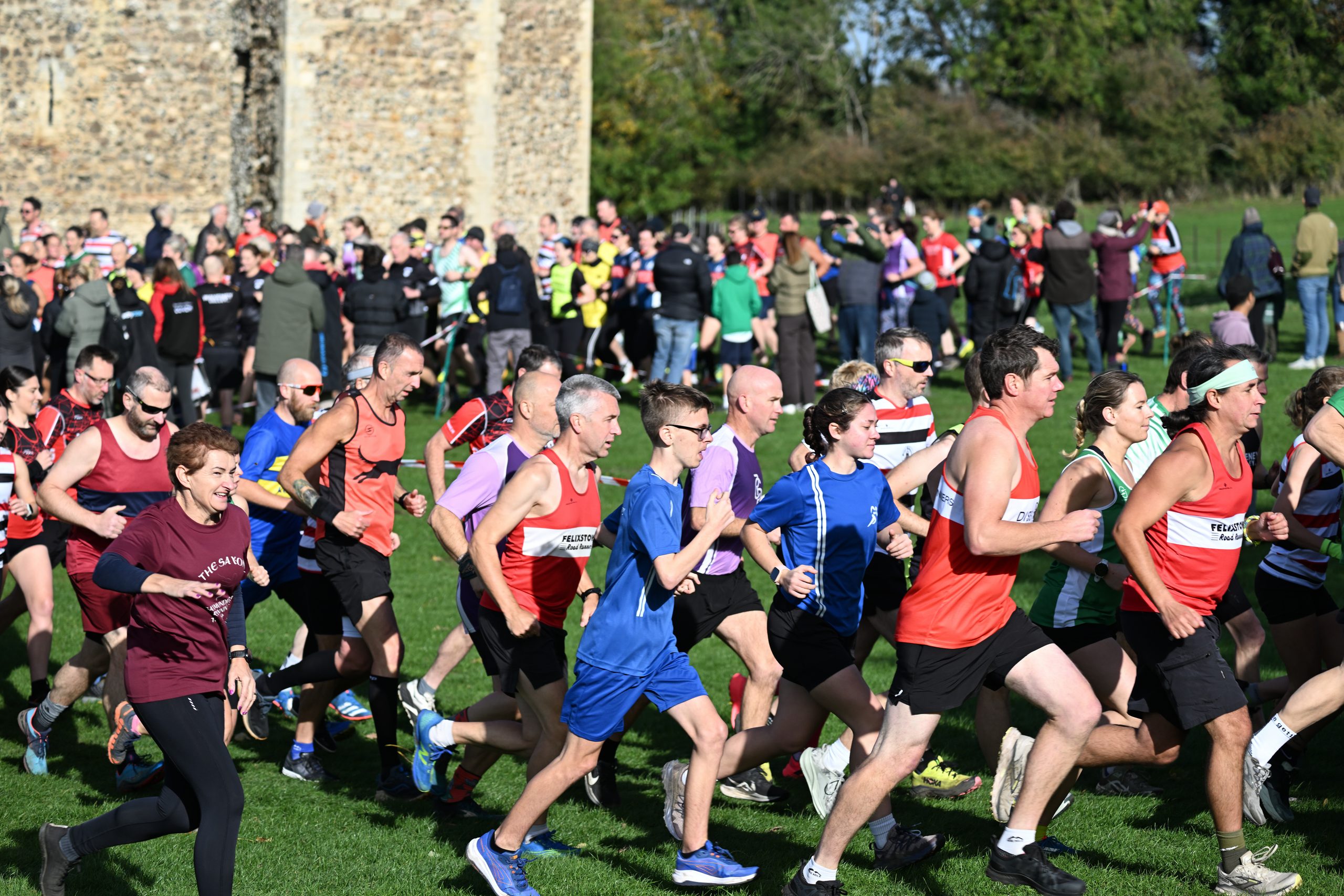
This week’s Sunday race was the Saxons 5, which was a pleasantly shorter distance than last week’s half, but obviously faster so still tough. It was ridiculously hot too – feeling too hot standing in the sun in shorts and T-shirt long after having cooled down from running doesn’t seem right in October. I managed my second-fastest time on the course though, so can’t complain. The memento was a beanie hat, which will come in handy if it ever gets cold again, as the one from the 2016 Scenic 7 is starting to get a bit frayed. Certainly more useful than another medal.
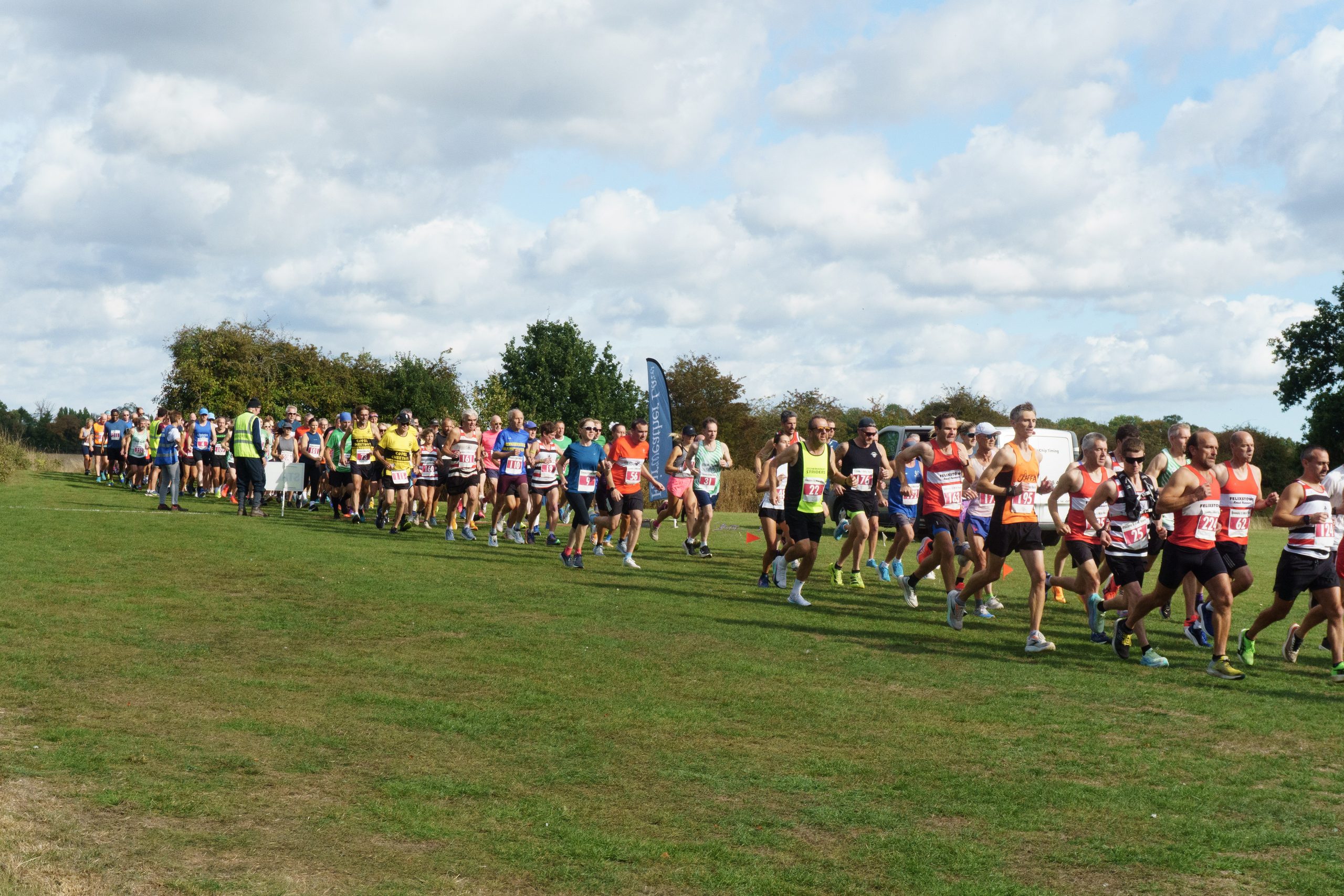
Saxons 5 start
Then, predictably, we ended up in the clubhouse/Cricketers for tea.
I took Monday off, largely to recover from the Coastal 10 and/or the post-Coastal-10 pub session. As far as I can remember I didn’t do a lot, although I did manage to drag myself out for a slow recovery plod round the heath in the early evening.
Back to cycling to Felixstowe for Tuesday training this week, as so far the summer seems to be resolutely sticking around. I’m sure in the old days T-shirt evenings in late September would have been unusual, and referred to as an “Indian summer”, rather than just an extension of the normal one. My front light battery went flat shortly after we set off to come home, so I had to stick close behind the pack so I could see where I was going.
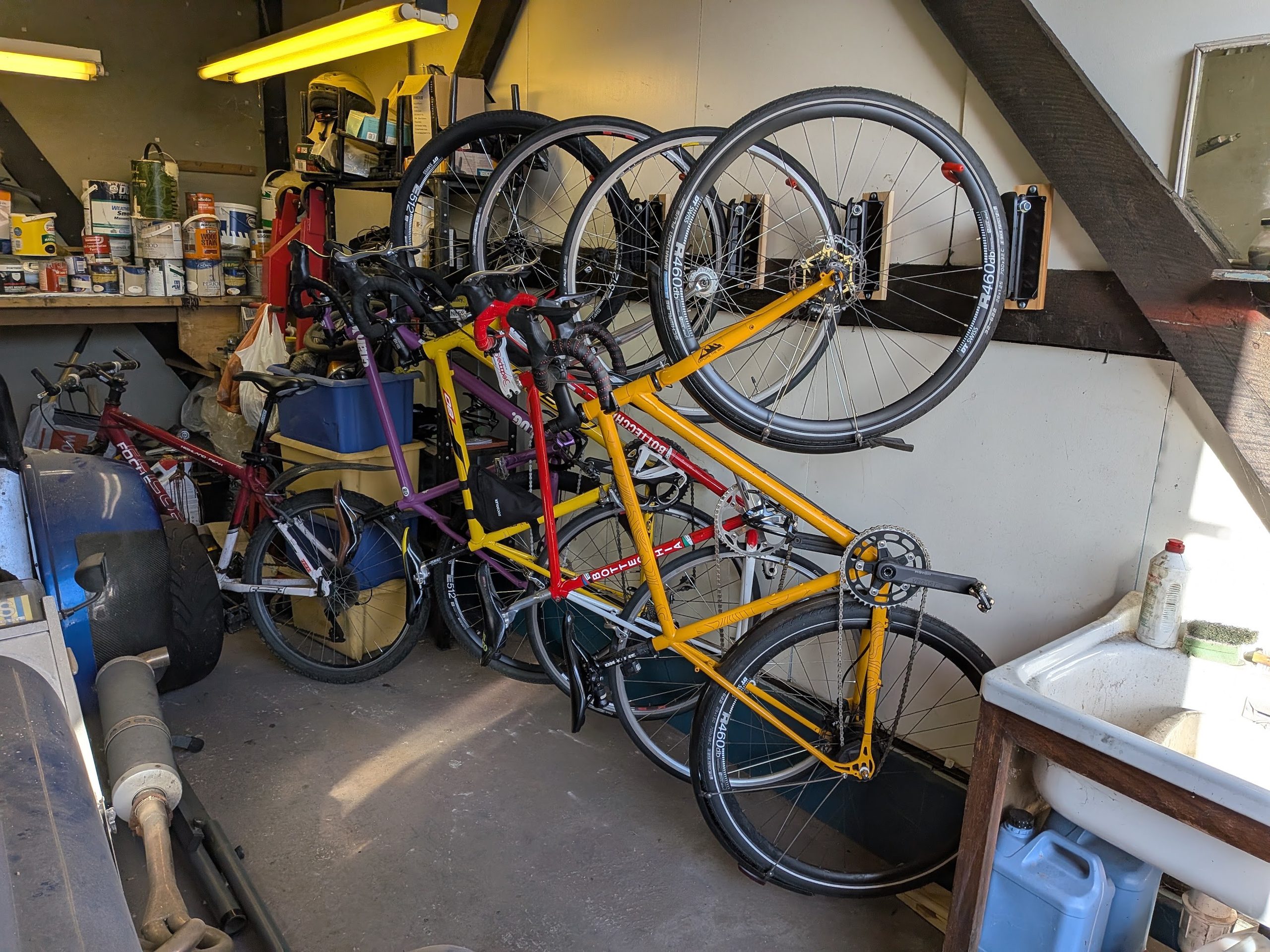
On Saturday I spent the afternoon rearranging some of the junk in the small garage to make enough space to fit some bike storage mounts on the wall. I still need to get another couple, and make even more space for them (which will probably require a slightly more effective tidying, and maybe actually throwing some stuff out), but at least for now I’ve gone from four bikes in the house to just the one.
Slightly more organised bikes
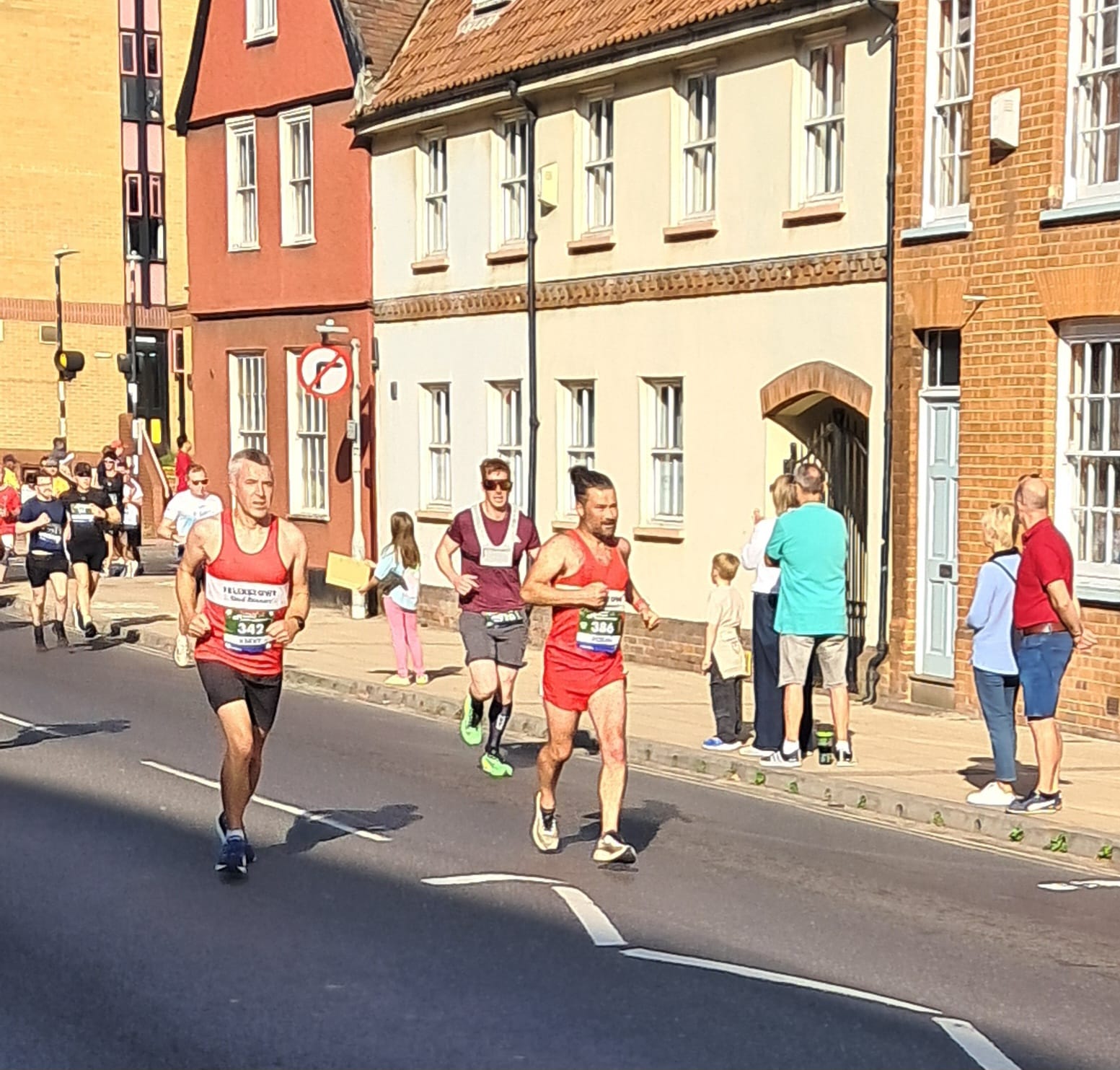
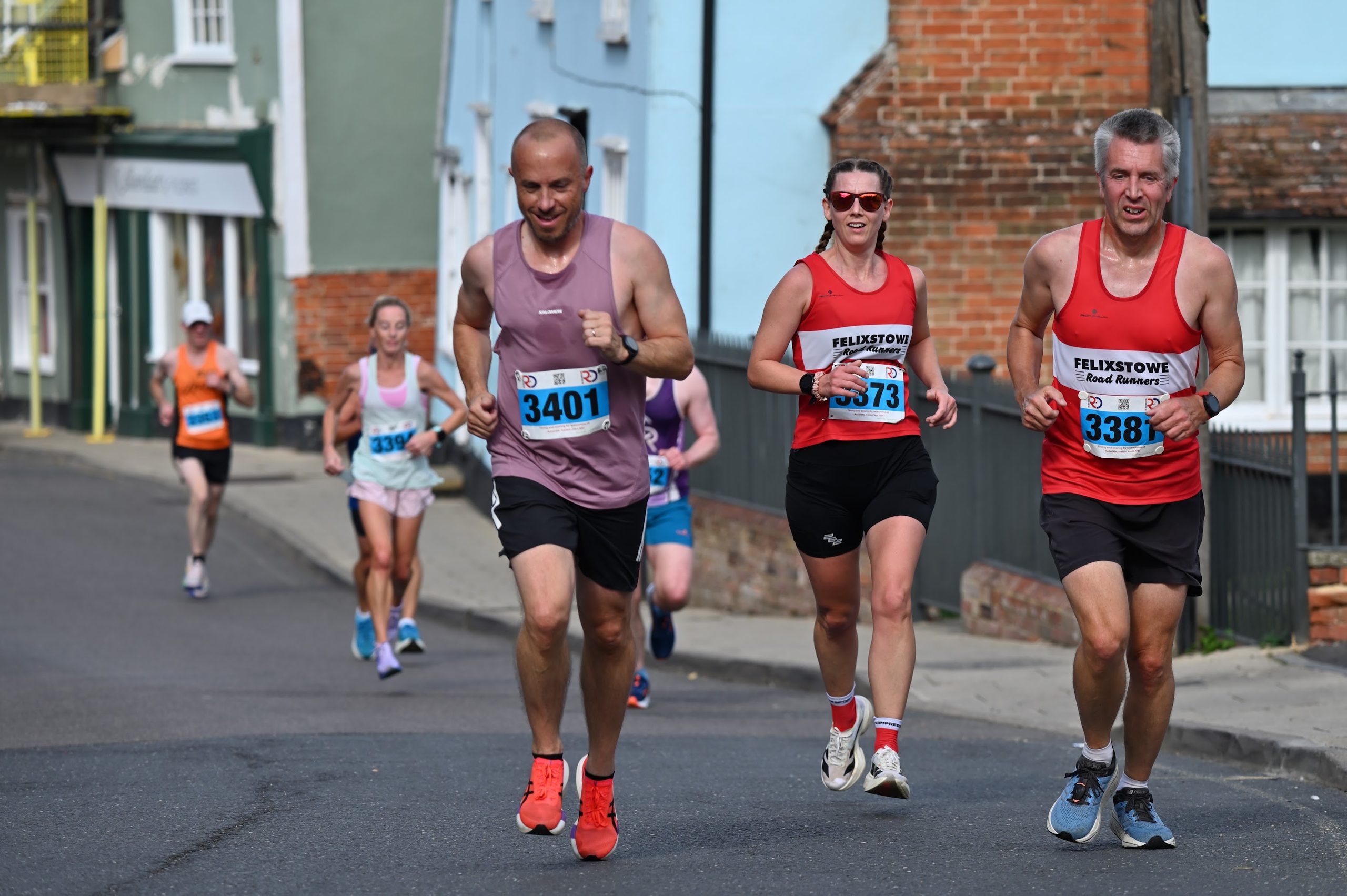
Sunday was the Ipswich Half, which is always a tough one with a couple of big (for Suffolk) hills. It always has a good atmosphere too though, and although I did skip it for a couple of years it seems a bit wrong to not take the opportunity of a closed-roads local race. I was exactly two minutes slower than last year – not sure whether to blame the heat or the fact that I didn’t have Holly and Maria for company this year, because they got stuck in the toilet queue and ended up starting so far back that it took them five minutes to cross the start line.
Catching up with Robin around the two mile mark
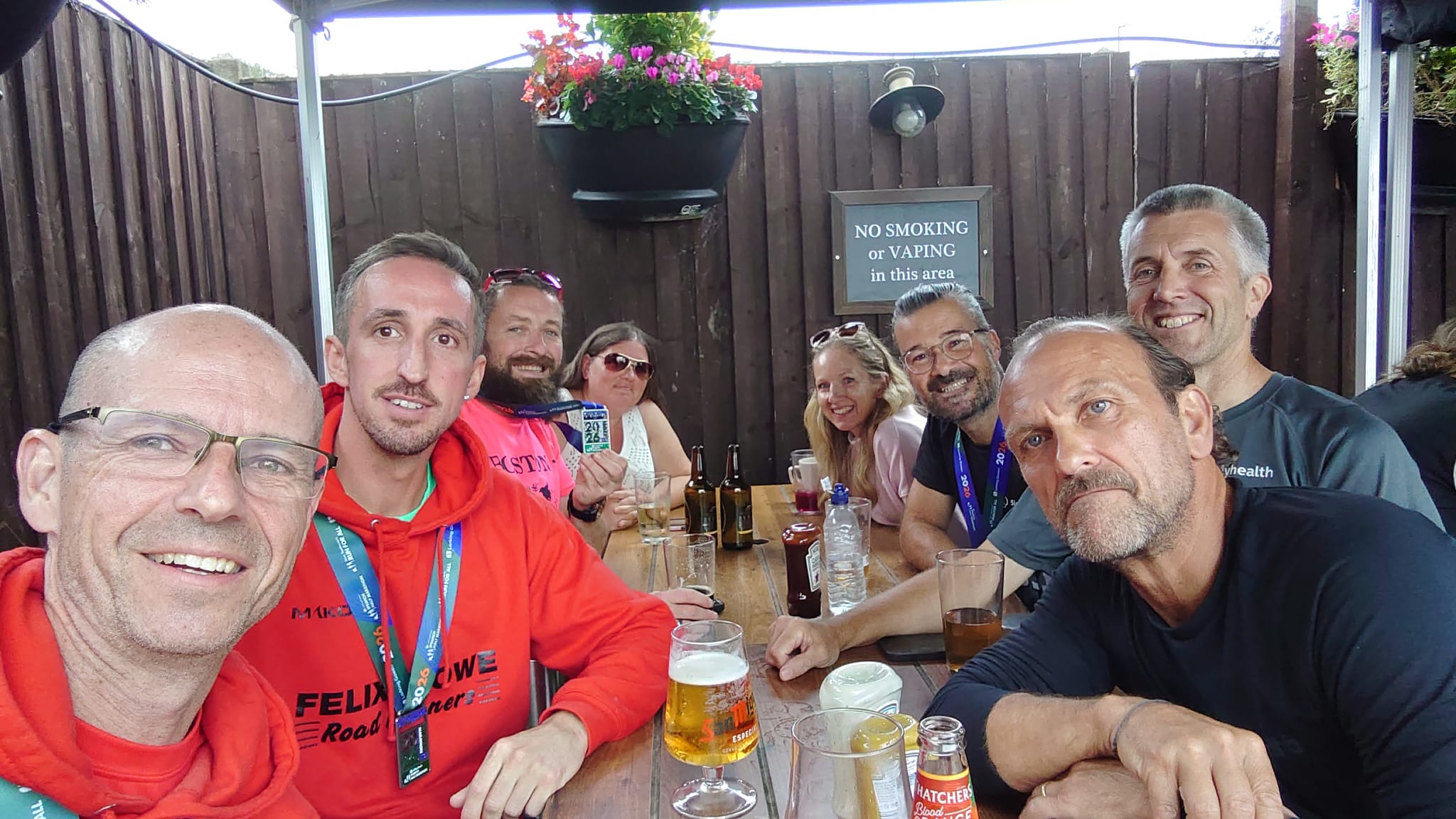
Predictably we ended up in (or outside) the Cricketers again, and while some people went home to shower at some point in the afternoon and came back (and the Felixstowe-based folks left after a while to get a bus home), I ended up staying into the evening. I’m not sure being in a Spoons long enough to have lunch and dinner is entirely recommended.
Some of the post-race refreshment gang
I’ve nearly finished watching the original series of Veronica Mars, and have been enjoying listening to the Bring Backup podcast alongside it. I had to put the latter on hold though, as with only a few episodes to go they suddenly decided to reverse their policy of avoiding spoilers for the film and season four. I’ve also been watching the second series of Ludwig, although I can’t really remember any of the plot points from series one that are still apparently fairly important to being able to keep up with what’s going on.
On Tuesday we had a first aid demo/practice at work, organised by Oli and Leon, who’ve recently joined the on-site ambulance team. Good to get a refresher on CPR and how to use an AED, plus a few other bits and bobs. The best bit was when Faye managed to have a coughing fit just as they were talking about how to treat someone who was choking, although she was very insistent that she didn’t need to be Heimliched.
Lots of people were skipping Tuesday’s training session in favour of watching the football, and I ended up joining Rob, Jo and Neil for an easy local six miles straight after work, before cycling down to the Plough to watch Ipswich get beaten by Arsenal (although they did at least pull it back to 4-2).
On Wednesday I got to play at being an AA HomeStart man, by cycling over to Jane’s with my battery booster, to rescue her car that had suddenly developed a flat battery. Also a chance to get nearly knocked over by being leant on by Sky the greyhound.
On Saturday I got talked into joining Dave and family for a second breakfast in the Cricketers after parkrun. Gary and Maria had already started walking home, but we caught them up and they joined us too. Then in the afternoon I picked up Maria and we drove over to Felixstowe to help set up for Sunday’s Coastal 10 race. I think this is the fourth year I’ve put the signs out for the Landguard end of the route, and I’m getting quite good at remembering where they all go now.
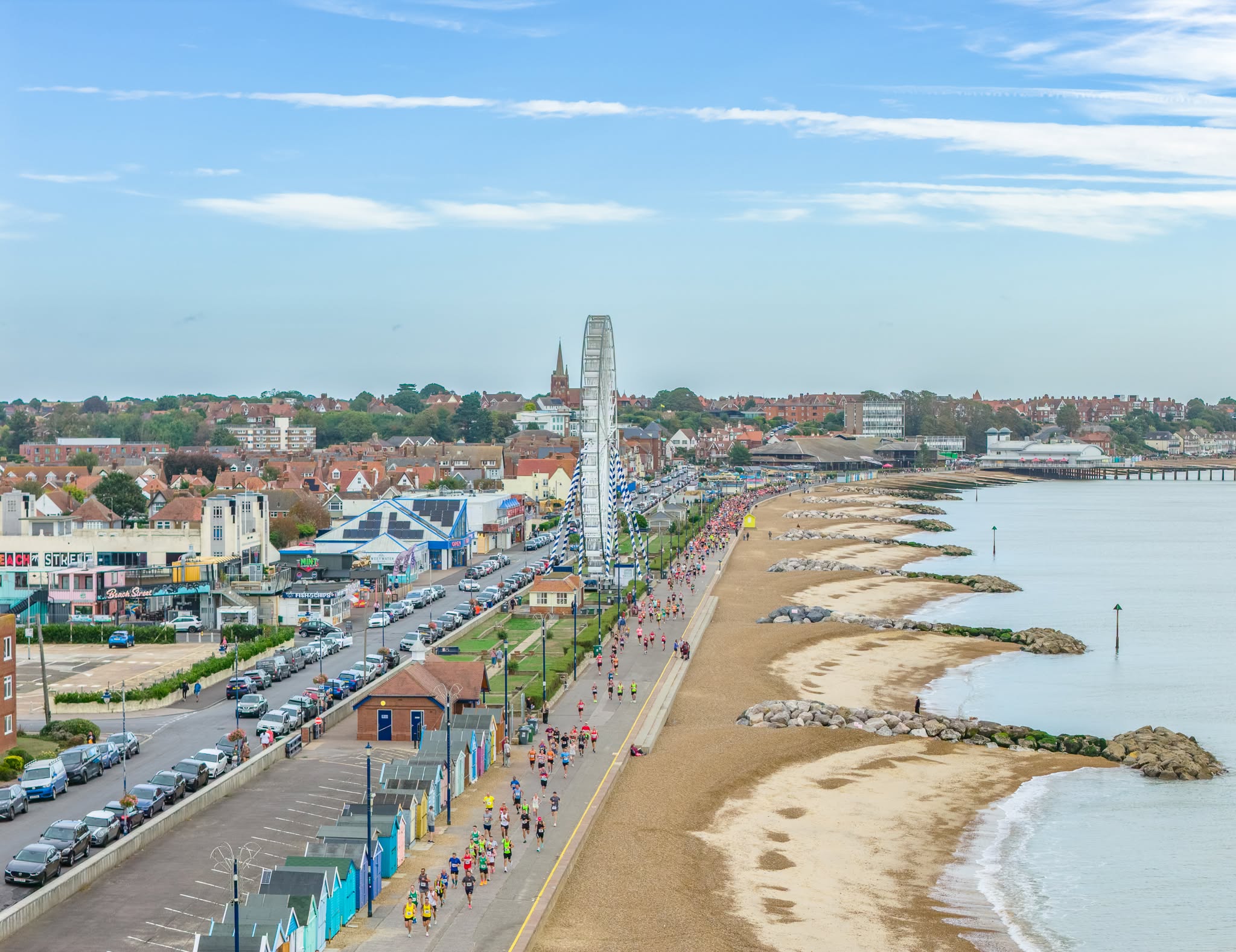
Then on Sunday it was time for the actual race. As usual I wasn’t expecting to do particularly well, but in the end I was within half a minute of my PB time, and as that was four years ago it was my best age grade for the distance. I managed to keep up with Maria for the first few miles, then once she’d left me behind I slowly caught and eventually passed Dom and Robin. Ryan had a great day, finishing in second place, with team-mates Haydn and Neil (not that one) in third and fourth. Obviously that got us the men’s team prize, and Maria and two of the Sams also got us the ladies’, so a good day for the club on home soil. After an inordinate amount of faffing (and a bit of helping with clearing up) we stopped at the Falcon for a couple of post-race beers (the Half Moon was mysteriously shut), then most of us ended up in the Cricketers again later.
If you look closely you can just see me at the start of the beach huts (drone photo by Jeff Welch)
Is it maybe starting to almost feel like autumn? We’ve finally had a bit of rain, I’ve worn jeans instead of shorts a few times, and there was even one night when I closed my bedroom windows, although that soon proved premature and the indoor temperature even with them open again hasn’t really dropped below 20°C. Ninja cat has occasionally deigned to come and purr on my lap a couple of times, but is still spending 99% of his time hiding in the garden.
Much like rural buses, having had the first race for ages on Sunday, another one turned up a day later. This was the Bury St Edmunds leg of the A14 track challenge, which is where a few local clubs get together for 5000m on the track, with three races through the evening for people running different times. Once again I’d entered the middle (20–23 minute) one, so after cheering on some or our faster runners in the first one (Ryan came third, in about 16 minutes, having won the previous day’s 10k) I slogged my way round. I ended up only being 19s slower than last year, but more importantly after being out-sprinted for the line by Robin last year I turned the tables this time! A few of us had taken the train there, with our bikes, in order to facilitate an evening in the rather fancy Bury Spoons.
What with tired legs and the aforementioned weather changes I drove to Felixstowe instead of cycling for Tuesday’s training session for the first time in a while, although Neil put us to shame by cycling on his own. I also didn’t run very fast. We did cycle to Alton Water parkrun on Saturday though, to join Mark for his 500th parkrun (still another year and a bit before I get there).
I took Friday off work, and intended to hack down the overgrown bit of hedge at the side of the house. I made a start, but filled both brown bins with stuff I had to cut down just to reach the hedge. Oh well, they’re being collected on Wednesday, so I’ll do a bit more after that. Actually, now I think of it, that might have been Saturday, in which case I can’t remember how I frittered away my day off.
I went for a long (well, not that long) slow run on my own on Sunday, and a bee flew into my eye. It stung my eyelid, but I must have scraped it off quickly enough because it didn’t come up in a lump and stopped hurting quite quickly. Then later we had another of those Sunday “who fancies going to the Cricketers for some food and a couple of pints?” evenings that ends up with us leaving at about midnight.
Late again, mainly due to a busy weekend. I don’t remember much of interest happening during the actual week though.
On Saturday I was cutting it a bit fine leaving home for parkrun, then as I got to the bottom of the hill about a quarter of a mile away my rear wheel suddenly started rubbing (or so I thought), then stopped going round at all. I didn’t really have time to look at it, so quickly locked it to a handy nearby rack and ran the rest of the way, dropping my bag and reaching the start line with about a second to spare (not that it mattered, as I wasn’t planning to go quickly). Then I had to carry the bike about a mile and a half home.
Once I’d recovered enough to have a look at it, I realised that it wasn’t the wheel that was stuck, but the bottom bracket (easily confused with a fixed gear). It turned out that it had somehow unscrewed itself and locked against the crank, which should have been easily fixed, but when I tightened it up the chainring was fouling the chain stay. After a lot of faffing about I realised that the bottom bracket was fitted the wrong way round, with the longer taper on the left – I can only assume the previous owner put it together that way, then unscrewed it a bit to stop it hitting the frame. It all works OK again, but now I have to find some red and white paint to touch up where it scratched the stay.
Sunday racing returned this week, in the shape of the Framlingham 10k. It was its usual hilly self, and I dragged myself round in only five seconds longer than last year, which is an improvement if you squint through the lens of age grading.
Slogging up Market Hill
Back to the subject of bike maintenance, I bought a bleed kit for the brakes on the Grinduro (see last week), and on Sunday afternoon I successfully bled the front brake. Unfortunately when it came to the rear, the bleed nipple on the caliper was seized solid, and defeated a variety of tools. I managed to get some pad clearance back anyway, by opening the filling screw on the brake lever reservoir and pushing the pistons back in, displacing some excess fluid. So that bike is now rideable again, taking the total up to five (six if you count the terrible but more-or-less working mountain bike).
I was just getting ready to take the bike out for a spin to check that it all worked when I was informed that various people were heading to the Cricketers for food and beer before they all went to the Corn Exchange to see an Iron Maiden tribute band. I didn’t join them for the gig, but it would have been rude to skip the drinking too, so I combined that with the test ride, heading straight there, but adding a few miles (some on unpaved tracks) on the way home. The wheels I built seem to work properly, and even got the Solomon seal of approval for appearance and trueness.
So, remember last week when I said “I managed to get that urgent bit of work on an old project done in plenty of time for Friday’s deadline. I haven’t checked whether it worked in anger (I’m not paid for out-of-hours support!) but I don’t see why it wouldn’t have”? Well it turns out it didn’t. I checked on Monday morning, and it had failed to do anything over the weekend. I never quite got to the bottom of why – I added some extra debug tracing to help figure out what was wrong, but after deploying those changes it mysteriously started working perfectly (no doubt there’s a somebody’s law that covers this kind of situation – the watched pot of the software development world).
I thought I might get an easy time at club training on Tuesday, because a lot of other (faster) people had gone to the football instead. It didn’t quite work out that way, because some even faster people had still turned up and I ended up in that group instead! I also had to cycle there and back on my own, thought I’d try to push the pace a bit and ended up with my fastest ever ten miles (according to Strava) on the ride home. There might have been a bit of a tailwind, to be fair, but I was only 1mph slower on the way there.
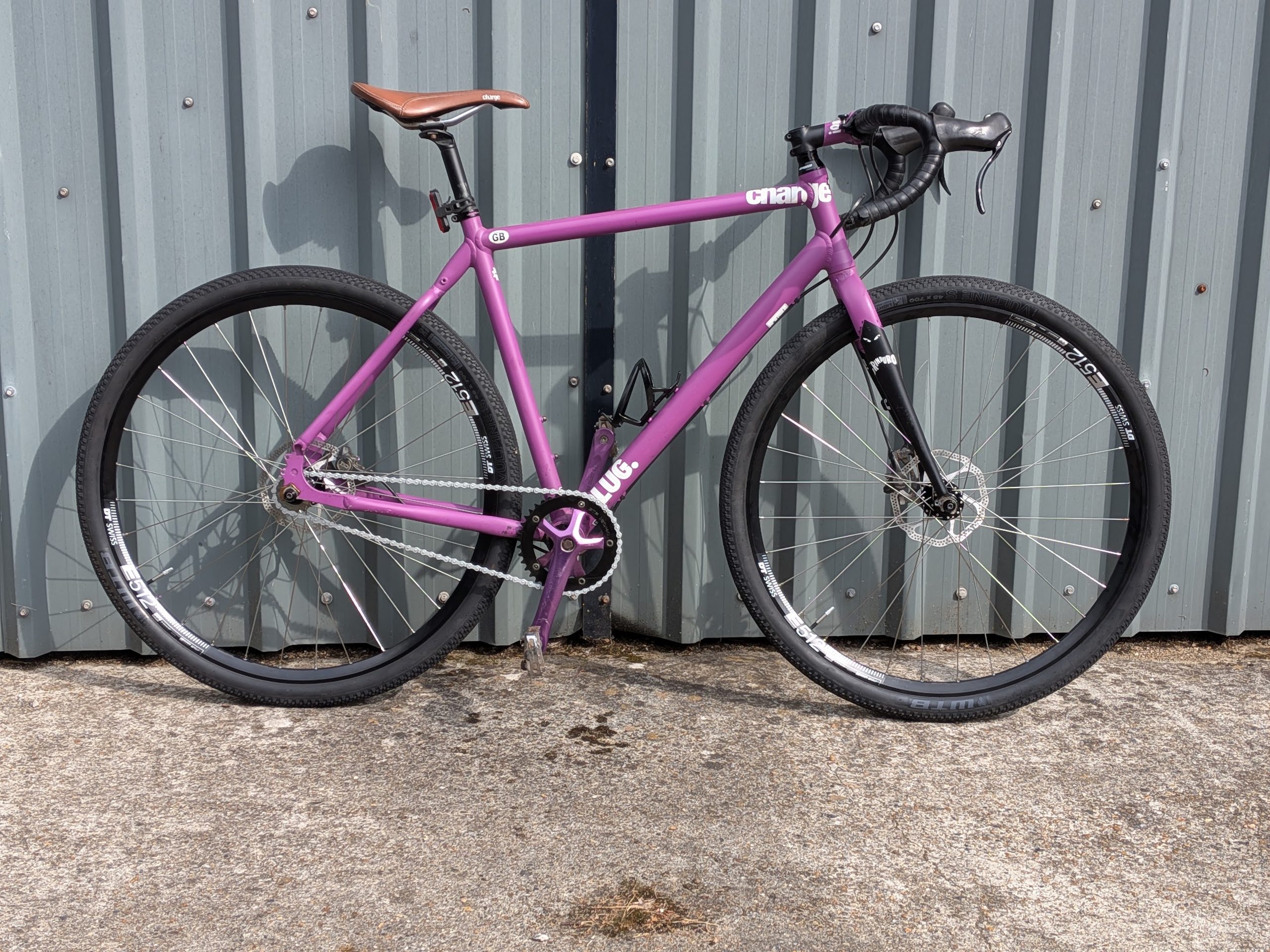
In other bike-related news I finally got the newly-built wheels on the purple bike, along with a new chainring and chain. It all looks good apart from the fact that with new rotors and pads the brake calipers don’t seem to want to release enough to let the wheels rotate freely. I tried grinding a little bit of material off the back of the pads, but that still wasn’t enough – next step will be to try bleeding them and hope that leaves the pistons sitting all the way back.
Grinduro almost back in action
A minor brag I forgot to mention the other week – while watching episode two of the current series of Only Connect, I finally achieved the dream of shouting out the answers to every missing consonant question before either team hit their buzzer :-)
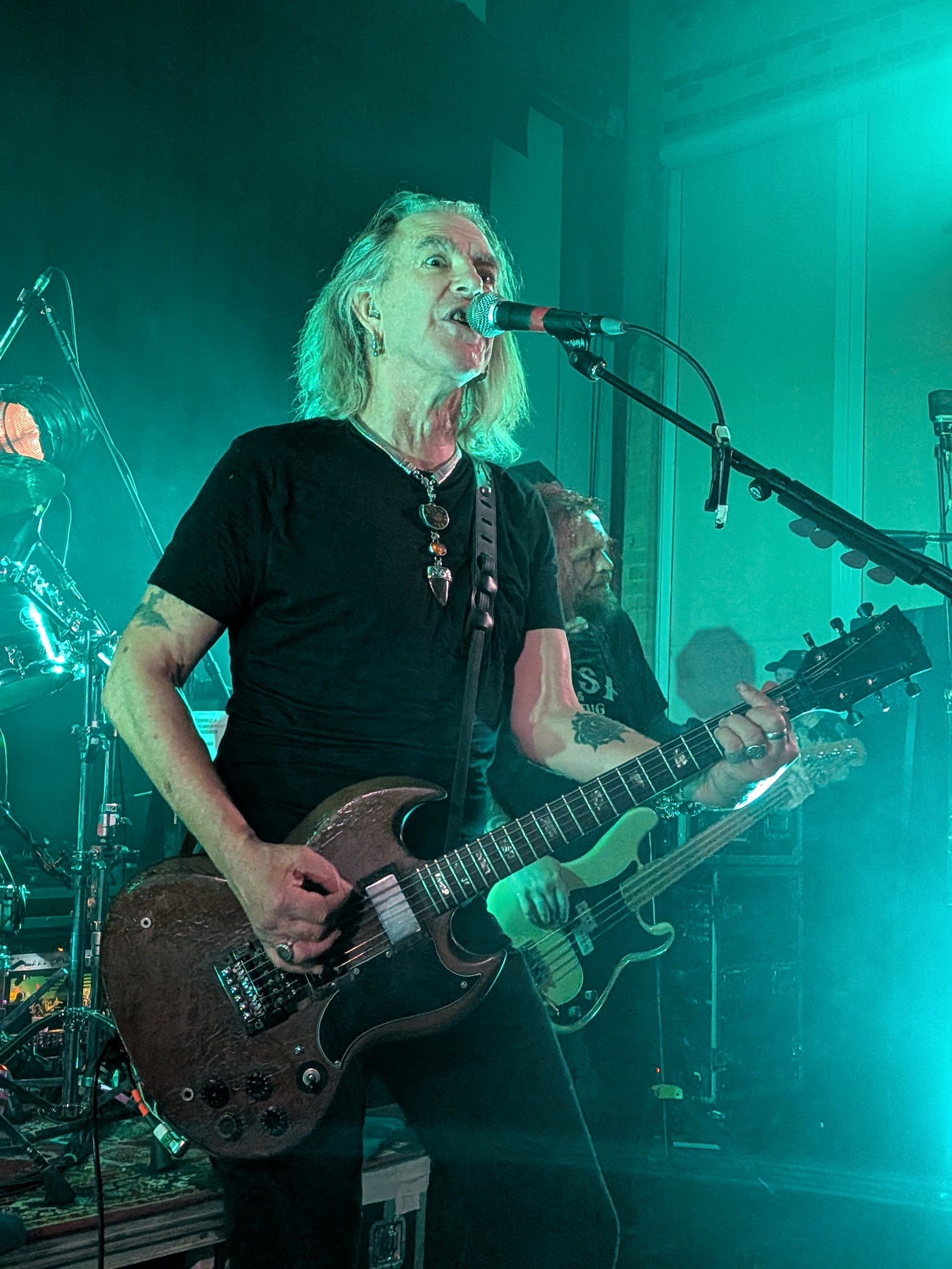
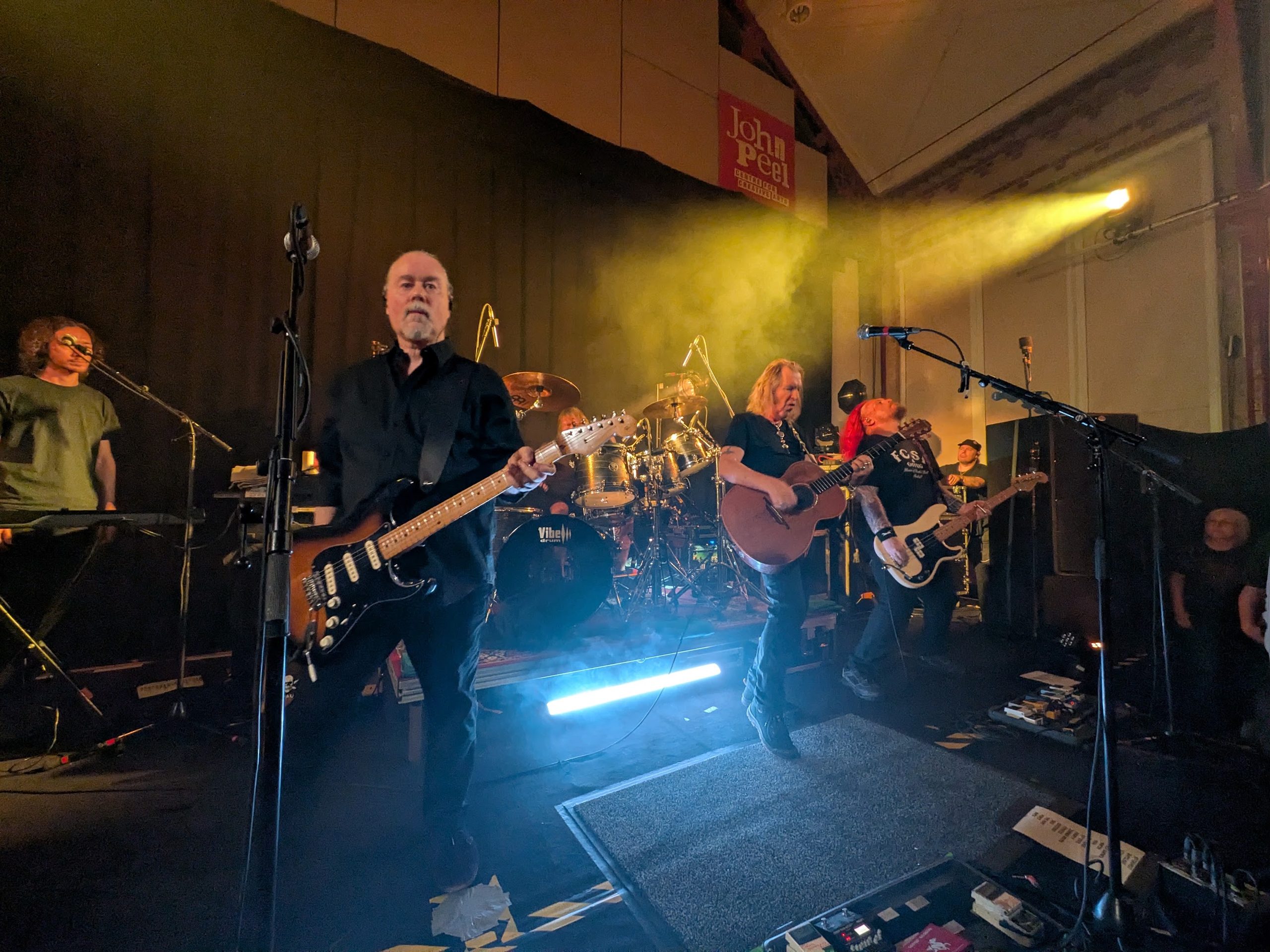
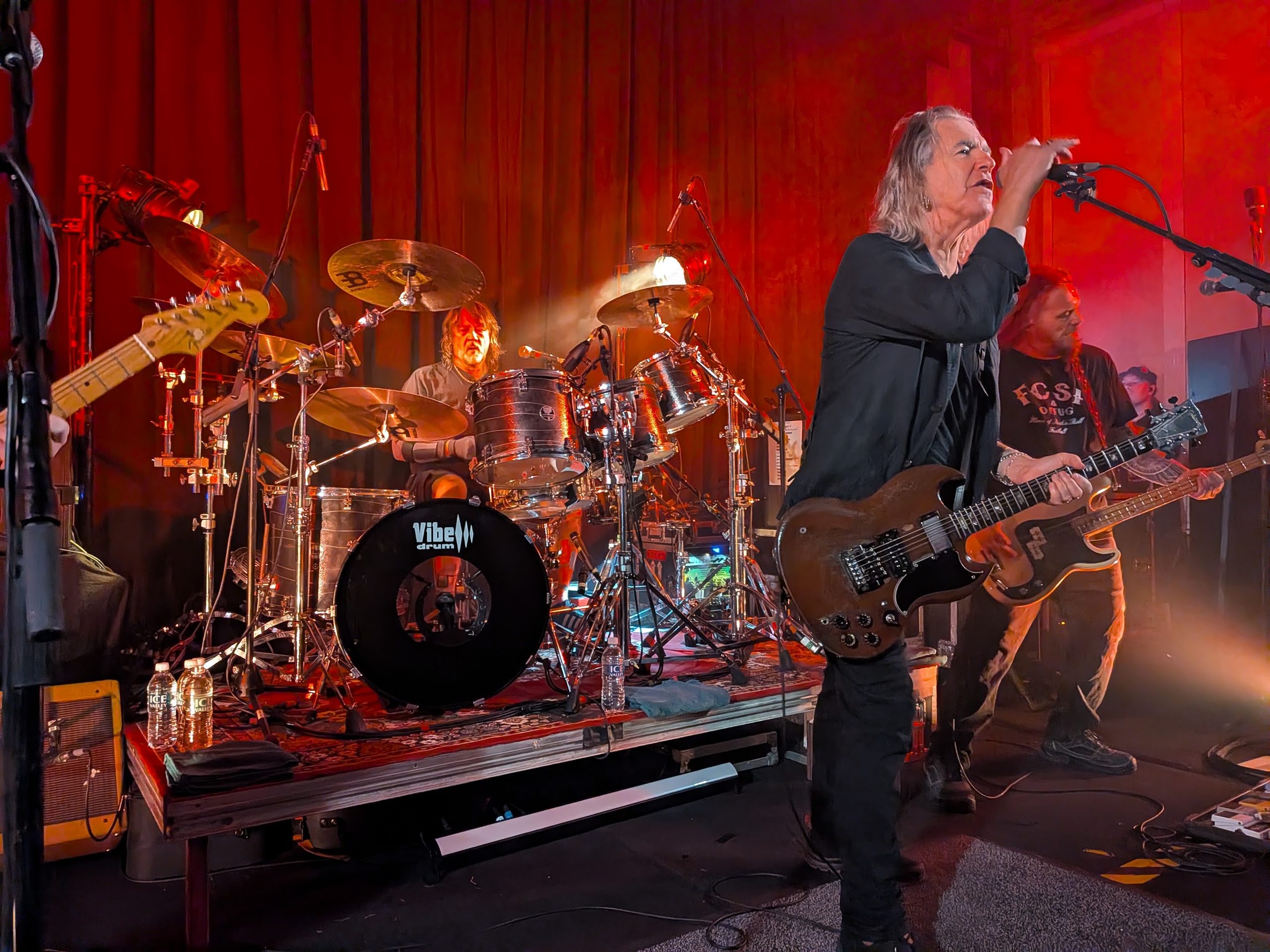
On Friday I got the train to Stowmarket (only just up the road) to see New Model Army at the John Peel Centre. Seemed crazy for them to be playing such a small venue – last time I saw them was for two sold-out nights at the Camden Roundhouse, which has 13 times the capacity. Apparently it was a combination of their bassist Ceri (wrong spelling!) Monger being a local and the band, like so many others, having been championed by Peel in their early days. Anyway, it was a great night.
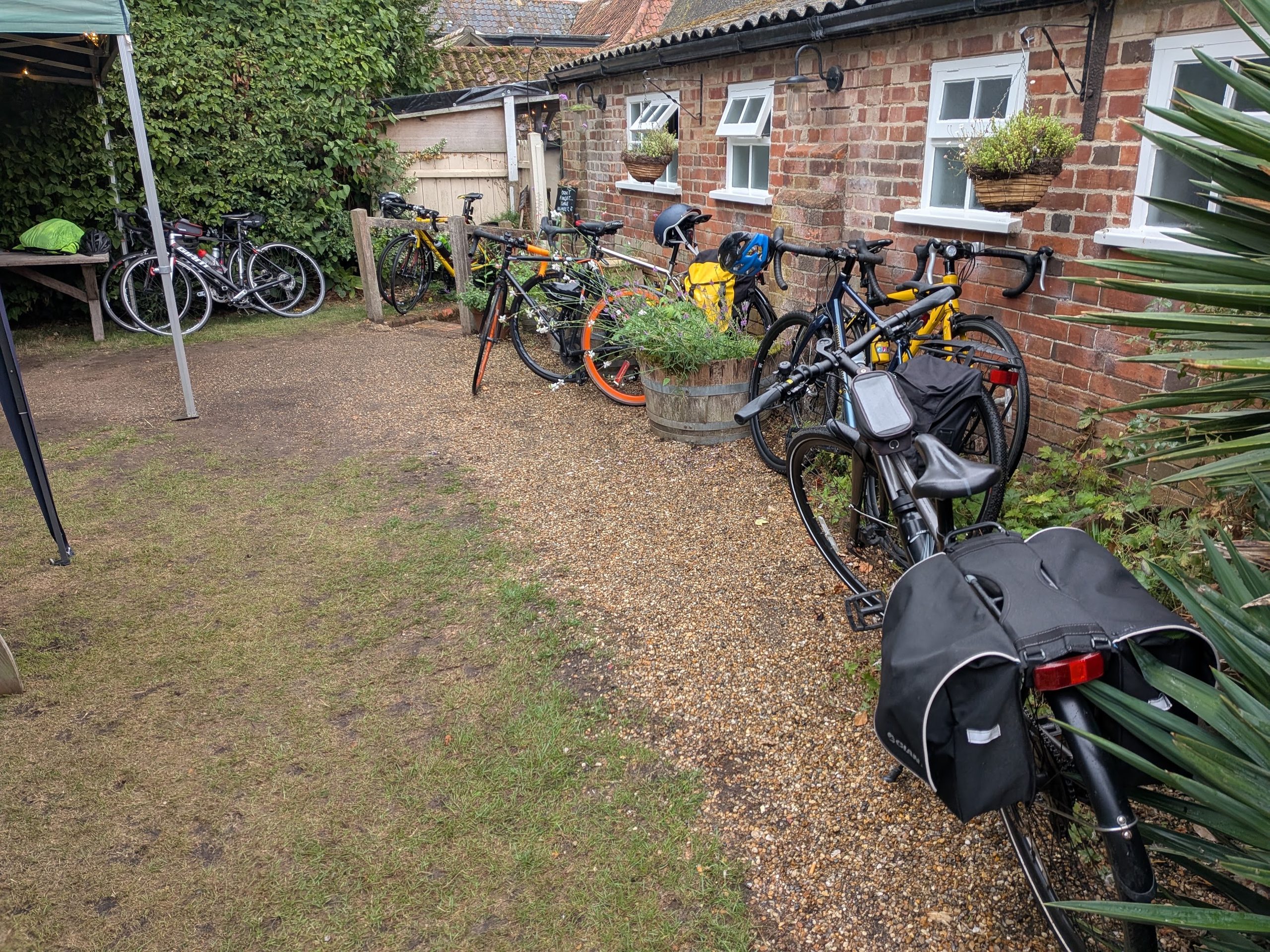
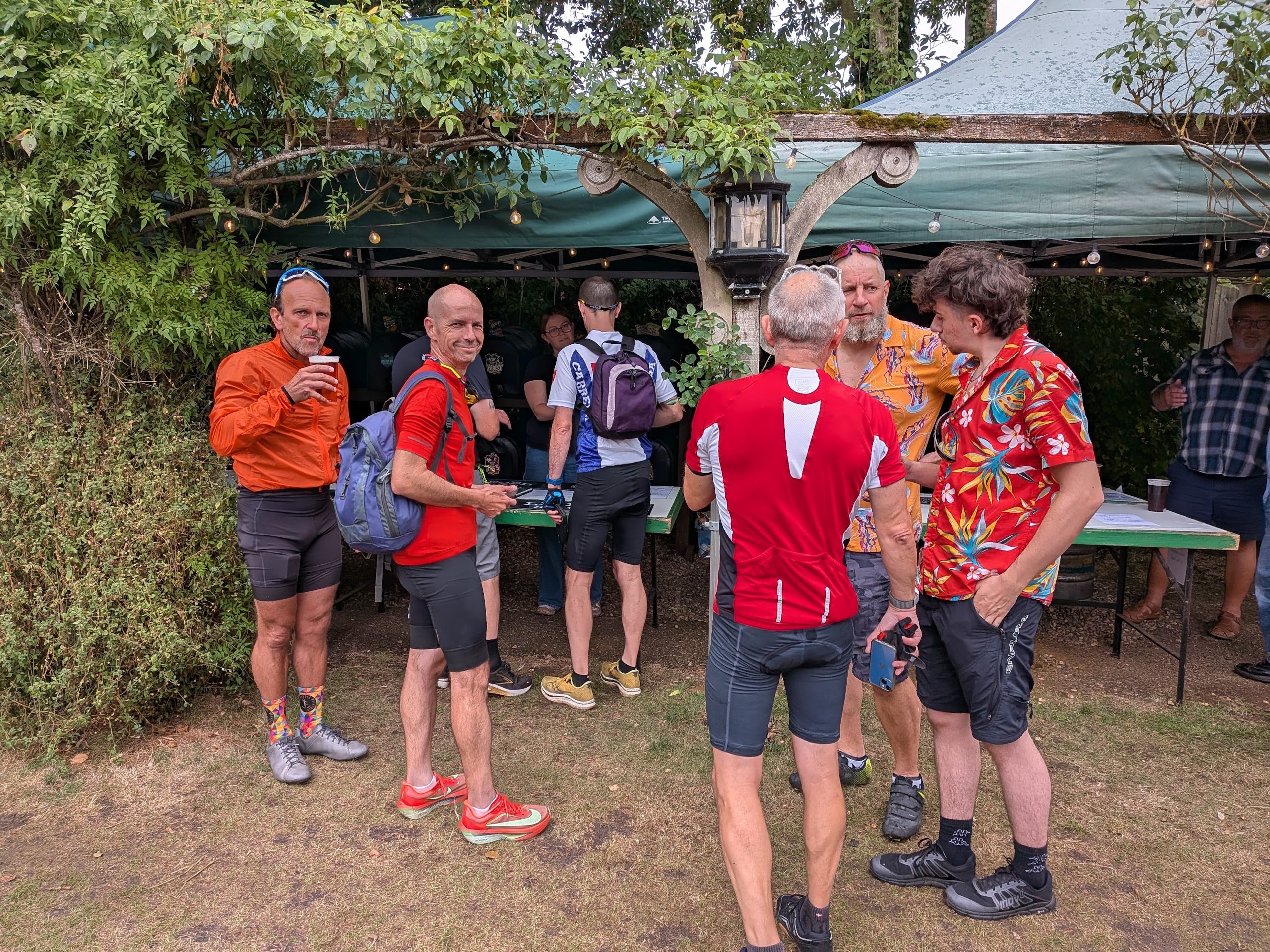
After parkrun on Saturday a bunch of us cycled out to the beer festival at the Low House/King’s Head in Laxfield, which is a lovely unique old pub (notable for having a taproom and no bar). We got there just as it was starting to rain, were able to stay dry while we were there, then took advantage of a break in the rain to head back to Framlingham where the Railway Inn was also having a beer festival. We stayed there while it rained some more, then stopped off at the Chequers in Kettleburgh, where we sat out yet more rain before finally heading home pretty much all in the dry (although there were some massive puddles to negotiate as we were nearly home). Just under 50 miles all told (plus a few cycling to parkrun and back earlier), although a few people still had a bit further to go once we got back to Ipswich.
On Sunday, after going for long run with Holly, I got talked into joining Rob, Jo and Neil in the Plough to watch the football (Ipswich away to Manchester United, with a 4.30pm kickoff). It started well, with Ipswich going 1–0 up as I arrived, but ended up with a 5–2 loss. Afterwards we adjourned to the clubhouse (Cricketers) for some food, and accidentally kept drinking until nearly midnight.
We seem to be between heatwaves, which is nice. It’s still a bit warm during the day, but finally cool enough to sleep normally at night – Garmin even gave me a sleep score of 93 on Thursday! There was briefly some rain. I was in the pub for the first downpour and at home for the second, so avoided getting wet.
On Wednesday we had the regular Fat Cat meet-up, this time featuring Anders, Rupert, Mel, Tony and Dave F. It’s always good when Dave’s there as I’m not the only one drinking more than one pint before switching to the 0.5% Ghost Ship.
I arrived at work on Thursday to that familiar sinking feeling of reaching into my pocket only to not find any keys there. Fortunately I’d been at home on Wednesday and hadn’t left any clothes or my laptop in my locker, so the only impact was having to walk round in my cycling shoes (and to wrap my lock round the bike so it looked vaguely like it was locked unless you closely examined the topology. I went home at lunchtime and sure enough the keys were sitting in the back door. As usual, what I’d done was go to the garage to get my bike, realise I’d forgotten something and nip back into the house, apparently messing up my finely-balanced (on the edge of disaster) routine.
I heard a huge fox commotion one evening, and went out to find two youngsters in the drive (also, unrelated, there were bats flitting round). I gave them a bit of food (the foxes, not the bats), most of which I think the cats stole. The funny thing though was that the next day there was an even louder commotion, and I went to investigate again but didn’t take any food out. Nevertheless, all three cats immediately gathered round the “fox bowl”, in an excellent example of Pavlovian conditioning.
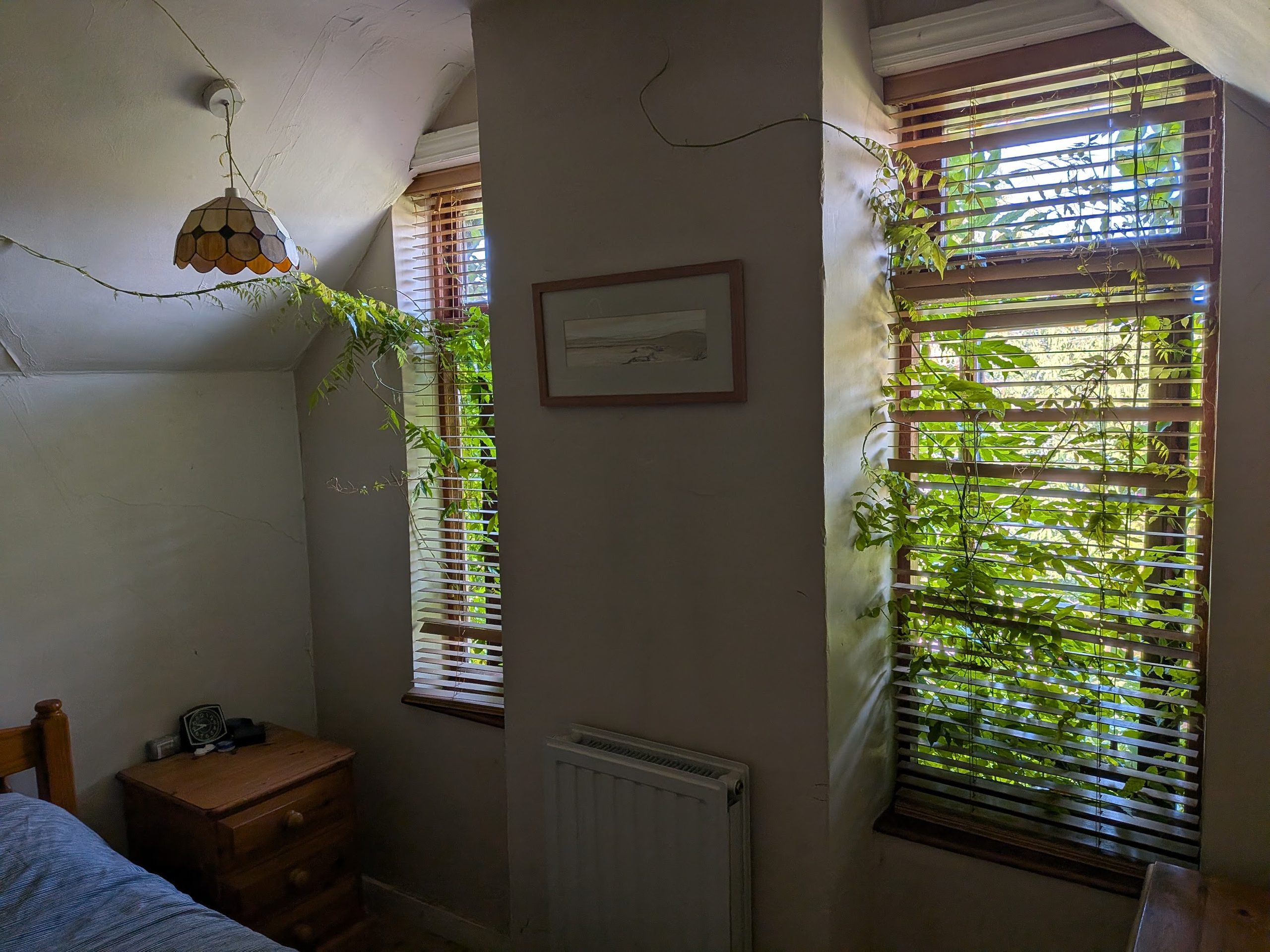
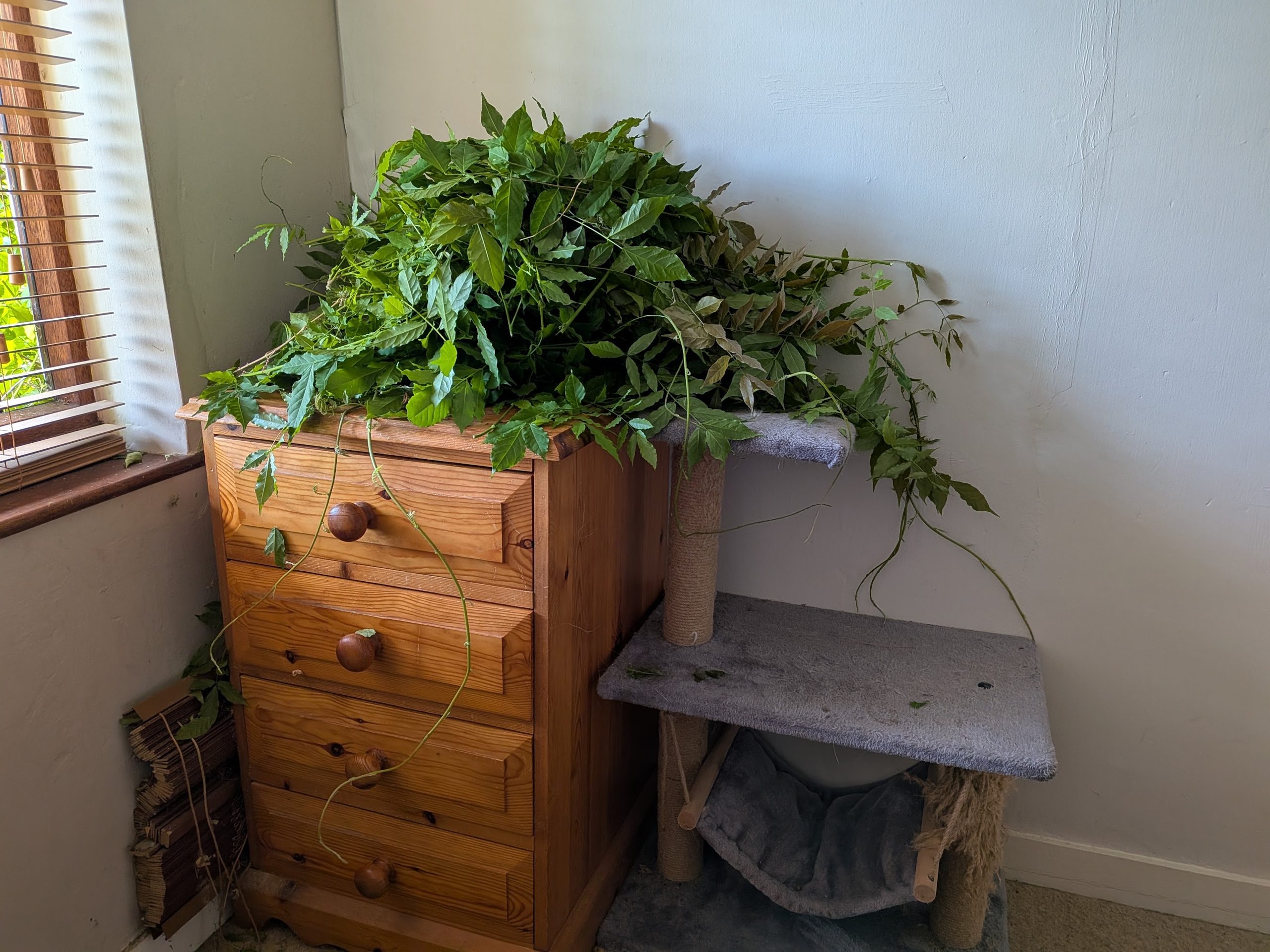
The wisteria on the back of the house that I cut back a few weeks ago has clearly been enjoying the warm weather, and was making a concerted attempt to also overrun my bedroom. I managed to clear the windows without accidentally cutting through any blind cords with the secateurs, but the whole thing’s going to need at least one more trim before the end of summer.
TriffidsThis seems like a lot of greenery for indoor pruning
I managed to get that urgent bit of work on an old project done in plenty of time for Friday’s deadline. I haven’t checked whether it worked in anger (I’m not paid for out-of-hours support!) but I don’t see why it wouldn’t have. The actual change, as predicted, only took an hour or two, with most of the rest of the time spent modernising, sorting out deployment glitches and engaging in the usual mortal combat against the corporate firewalls and web proxies. Separately, I had a brief call with the person who signs off the funding for the main project I’ve been the sole developer/tester/support person for for most of the past decade. The gist of it was that they wanted to be keep me happy to avoid me retiring in the extremely near future, as it’s become quite a critical system and they really need to start thinking about long term support (for now we’ve still got Oli in reserve, who worked on it with me for a couple of years). Naturally my indispensability never seems to come up when it’s pay review time.
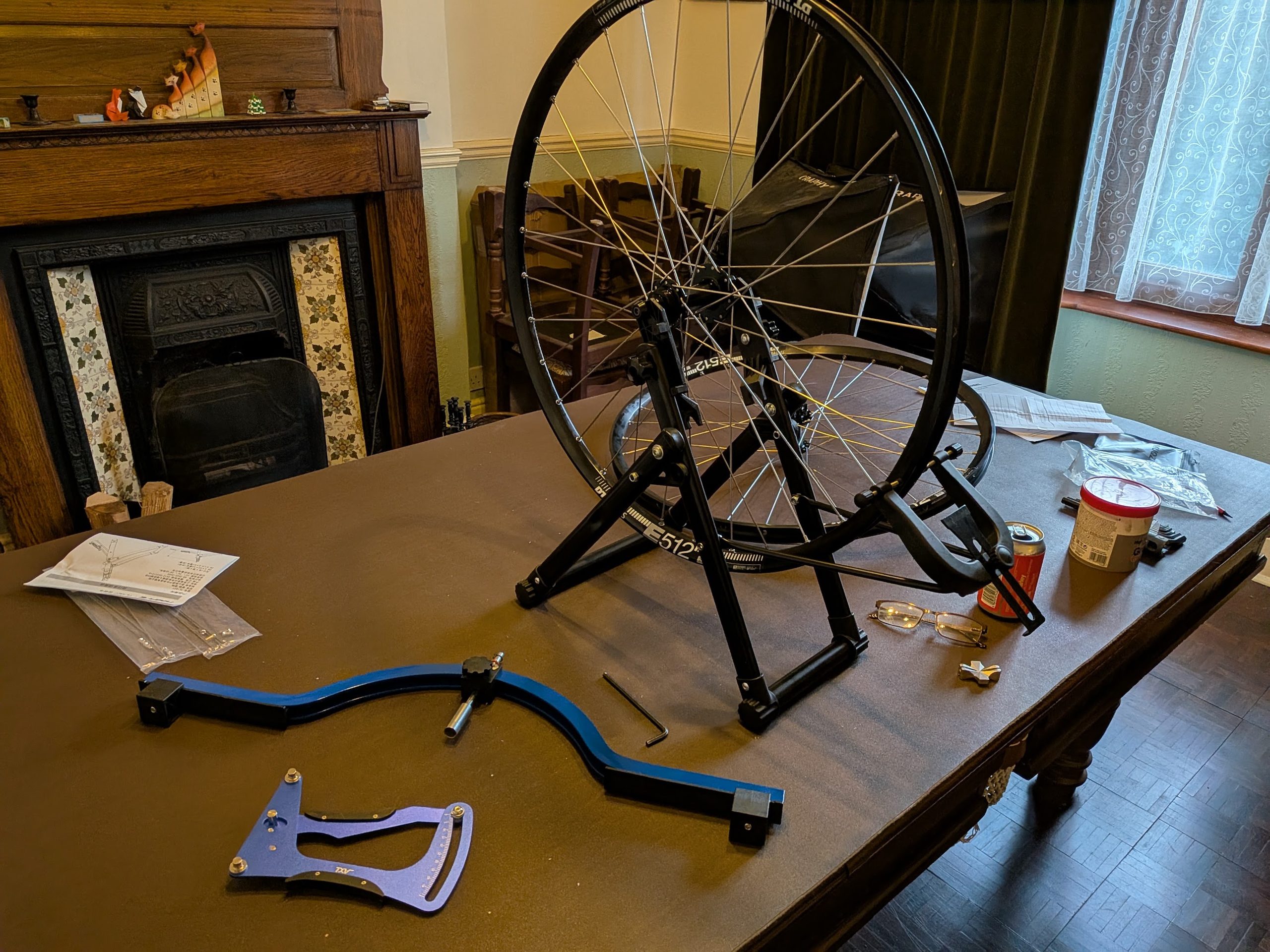
After parkrun (plus some extra miles with Holly and Maria) I finished building the new wheels for my purple bike. It all seemed to go pretty smoothly, with both of them ending up true within a fraction of a millimetre. On Sunday I gave the frame a bit of a clean, and now I just need to wait for a few more parts I’d forgotten to order earlier (brake rotors, rim tape, chainwheel and chain) to arrive to put it all back together.